

In 2020 Art Soto finished the restoration of his 1991 Chevy G10 van. He restored it in 1970s style, and called the van HWY1RAT. It was an awesome build and I was lucky enough to get to write about it for GHR that year.
But Art’s a hot rodder. And hot rodders are not “leave well enough alone” kind of people.
So Art went back to work on his van. With a goal.
“If Cadillac would have made a van in 1977,” Art said, “that’s what I’m trying to emulate.”


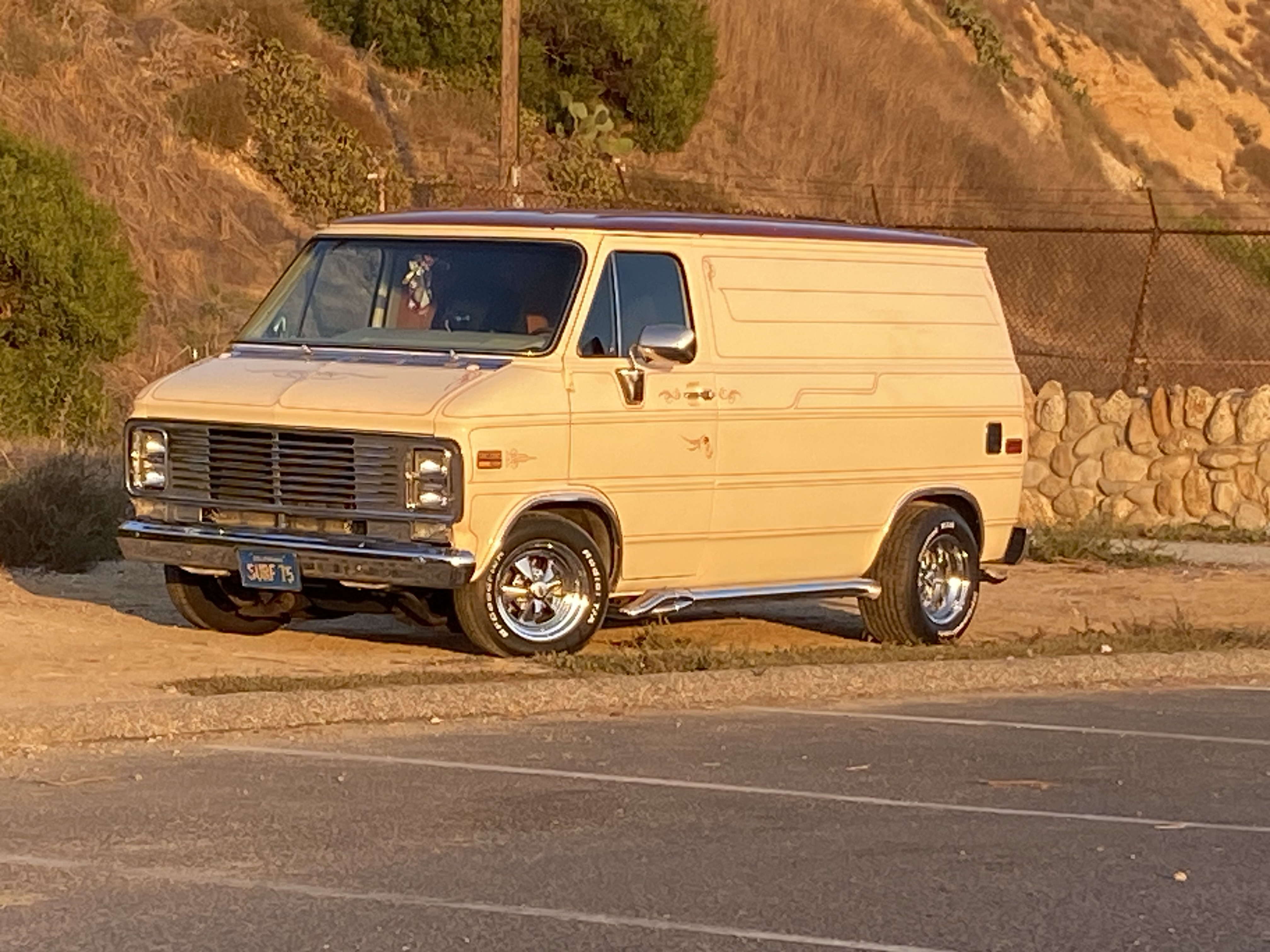
The new version of his G10 is called SURF75 and it deserves a new article in GHR.
“I grew up in a van all through the 70s,” Art told me, “going to the beach to surf with my cousin Richard in his 77 Dodge.”
Art grew up in Torrance, California, where he rode his Schwinn Stingrays, converting them into BMX bikes before there even were BMX bikes, and idolizing Evil Kenevil.
When other kids were worried about making the high school football or basketball team, Art and his friends were surfing in the morning, taking machine shop in the afternoon, and skating and BMXing after school.

He remembers first noticing Cragar mags on a Tonka dune buggy toy he had as a little kid. As he got older, he got into Volkswagen Bugs, then Mazdas and mini-trucks, and then American V8s, including an El Camino he restored in 1998.
But as family and work responsibilities grew, hot rodding started to take a back seat.
In 2019, Art was ready to get back into it. He saw the G10, which appeared to be destined for the junkyard. The van had developed an electrical problem that rendered it inoperable, and it had just been sitting.
As a child of the 70s, Art’s got some strong beliefs about what a van should be. “It had to be a shorty,” he said. “Had to have no windows. And it had to be a Chevy. I bleed Chevy.”
The G10 met most of those criteria.
“I gave the owner $200 for it,” Art told me, “and dragged it home on a rope. Literally on a rope.”

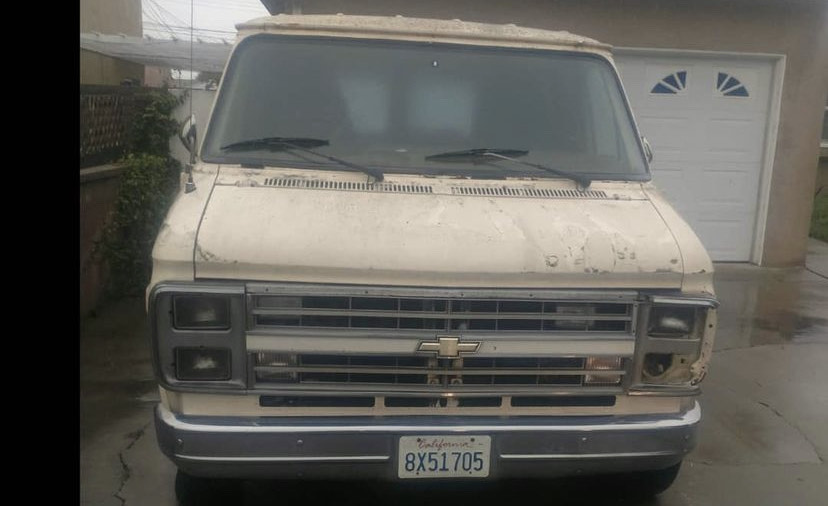
“It had been neglected for five years,” Art recalled. “They parked it in the driveway facing west, and they just left it there. It was so bad that it had mold, moss, and algae growing on it.”
Rust usually isn’t a problem with Southern California cars, but because the van was facing west all those years, it wound up collecting the morning dew on the cowl and that area was rotted from one side to the other. That was almost a deal breaker for Art.
But another $200 got Art an old conversion van to use for parts. The parts van donated its cowl and the necessary electrical components to get Art’s G10 up and running.
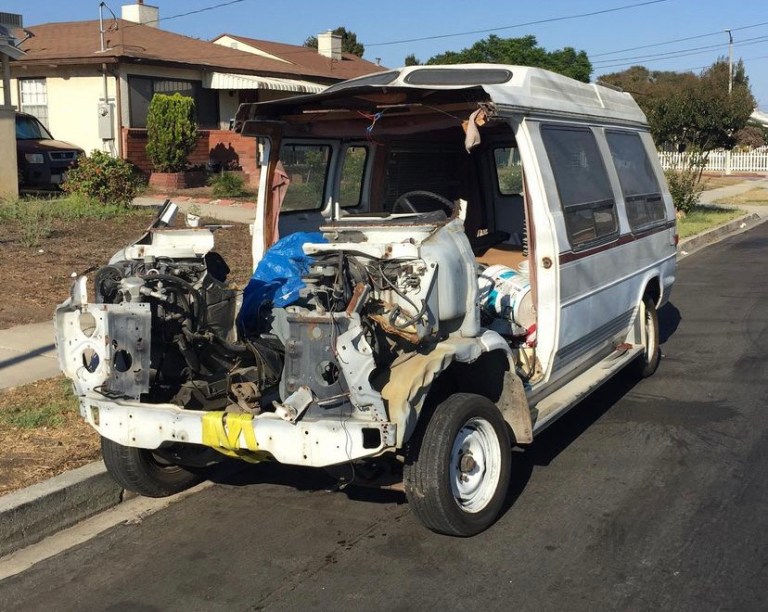
“I hooked up a battery,” he told me. “got power to the dash and fixed the electrical problems that had sidelined her. I turned the key and she fired up on the first kick. It blew out all the acorns that were in the exhaust and sat there and idled like a champ.”
That’s the G10’s 305 cubic inch small block Chevy that was idling like a champ. The small block was nearing the end of its 50 year run in the 90s, and Art’s plan was to replace it with an LS. But in 1991 the 305 had fuel injection and it was hooked up to an overdrive transmission.

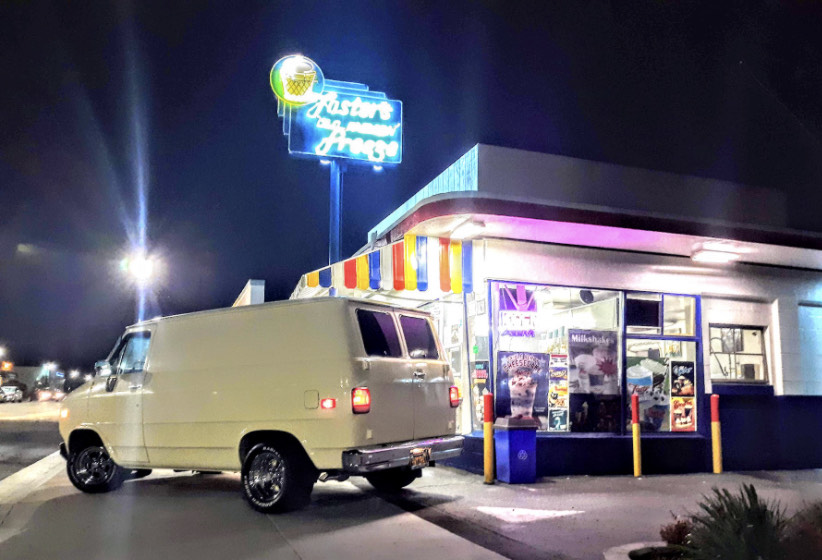
“It piqued my curiosity,” Art said. “The more I started driving her, the better she started running. Sometimes a car has a soul, and this one told me she wanted to live.”
It was running so well he was using it for his everyday transportation for a while. He kept the 305, doing a full maintenance on it and a complete valve body service on the transmission.
The 305 is still breathing through the stock exhaust and catalytic converter. “I want her to run as clean as possible,” Art said. “You can be a hot rodder and be a clean hot rodder.” The Patriot 73″ side pipes on the Chevy are for looks only.
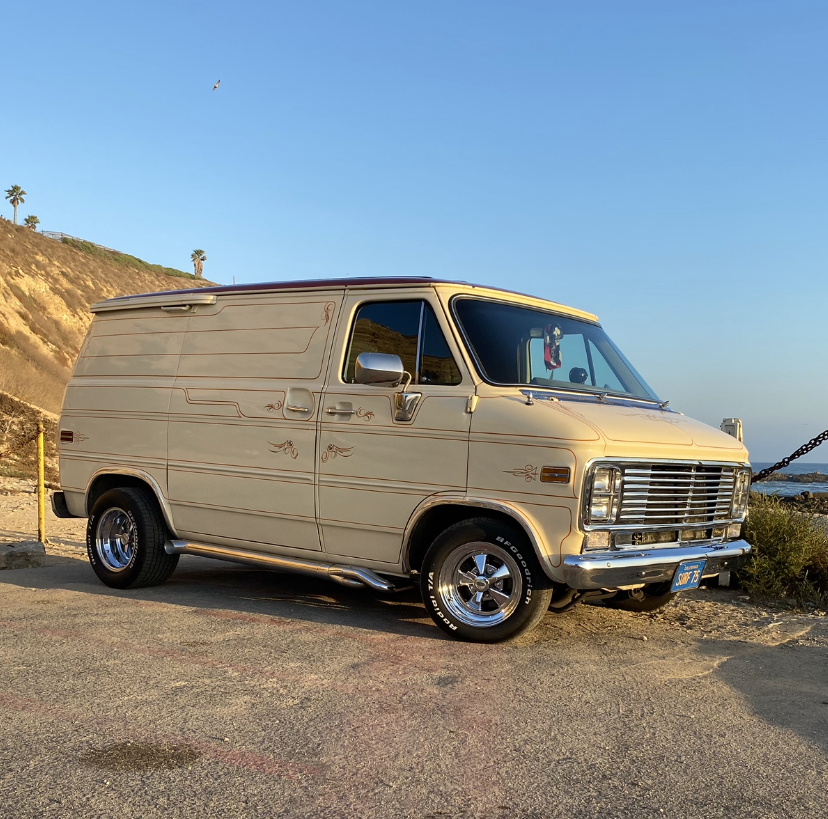
Another key aspect of that 70s van look is stance, and having the correct stance was very important to Art. “I picked the brains of 25 vanners on lowering the suspension,” he said, “and I got 25 different answers.”
He ended up using 3″ dropped spindles up front from DJM Suspension. Torrance Automotive helped with all the front end work, doing a complete rebuild that included the idler arm, steering box, tie rod ends, and the power steering box.
For the rear, Art relocated the leaf spring eyelets on the front perch about 2″ higher. He was shooting for – and achieved – having the same wheel gap front and rear.
Art also installed Monroe heavy duty coilover shocks in the front. He’s got Gabriel HiJackers in the back.
The end result is fantastic. “The van rides identical to stock,” he said, “because none of the geometry has been changed in the suspension. She rides like a cloud. Like a Cadillac.”


Ever since he had that Tonka dune buggy, Art knew what wheels he’d choose. There is a complete set of Cragar SS wheels and BF Goodrich TA radials on the G10. The Cragars are 15×10 in the rear, with 295/50 TAs. Up front Art’s running 15×8 and 225/50s. The front disc brake dust shields and the rear drums have been painted to match the body.
Although the goal is a 70s vibe for the G10, Art knows that not everything was groovy about vans in the 70s.
“The reason I chose a ‘91 van,” Art said, “was that I wanted the old look but I wanted overdrive, cruise control, tilt steering, intermittent wipers, power steering, power brakes, and power door locks. Believe it or not – I’ve got everything working on it. Even the AC blows cold.”
GM helped Art out by running the same body style on their vans from 1971 to 1996. They made minor changes to the grill and one change to the taillights during all those years. That’s why this G10 fits into Art’s plans to back-date it, making it look like a 70s van, but with more current convenience and technology.
Art took advantage of that to use many OEM General Motors components. Pretty much everything on the van, other than of course the side pipes, is from GM.

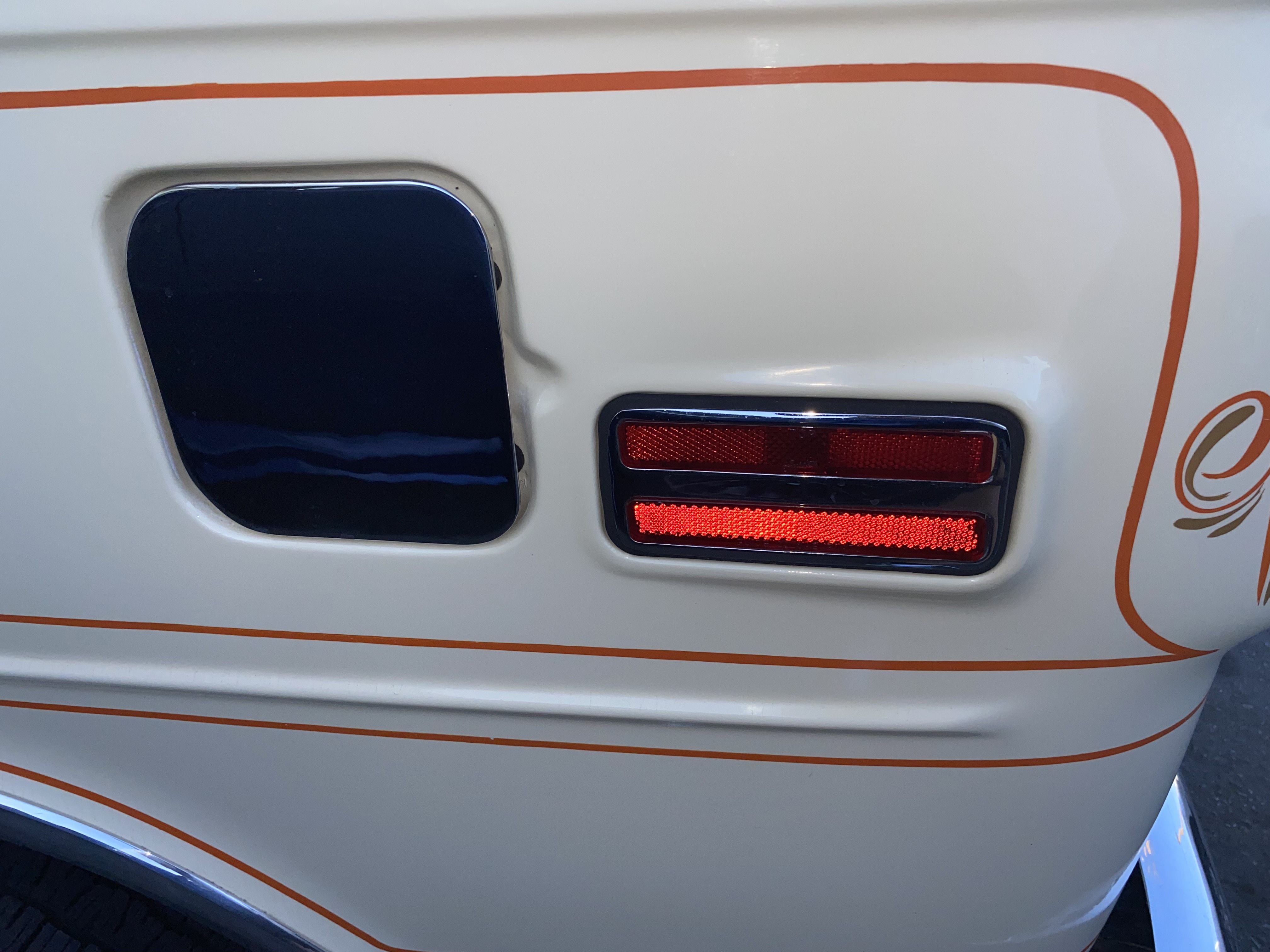
“I used a rare fender trim,” he told me, “A-pillar moldings, foot well steps,and chrome style windshield gasket from the upscale Beauville passenger van.”
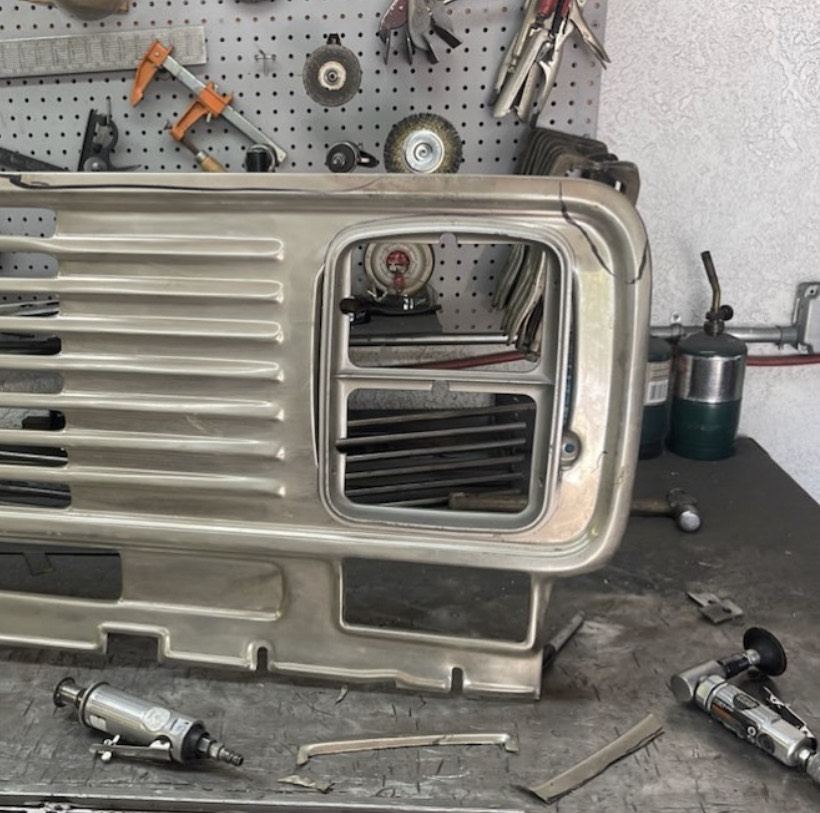
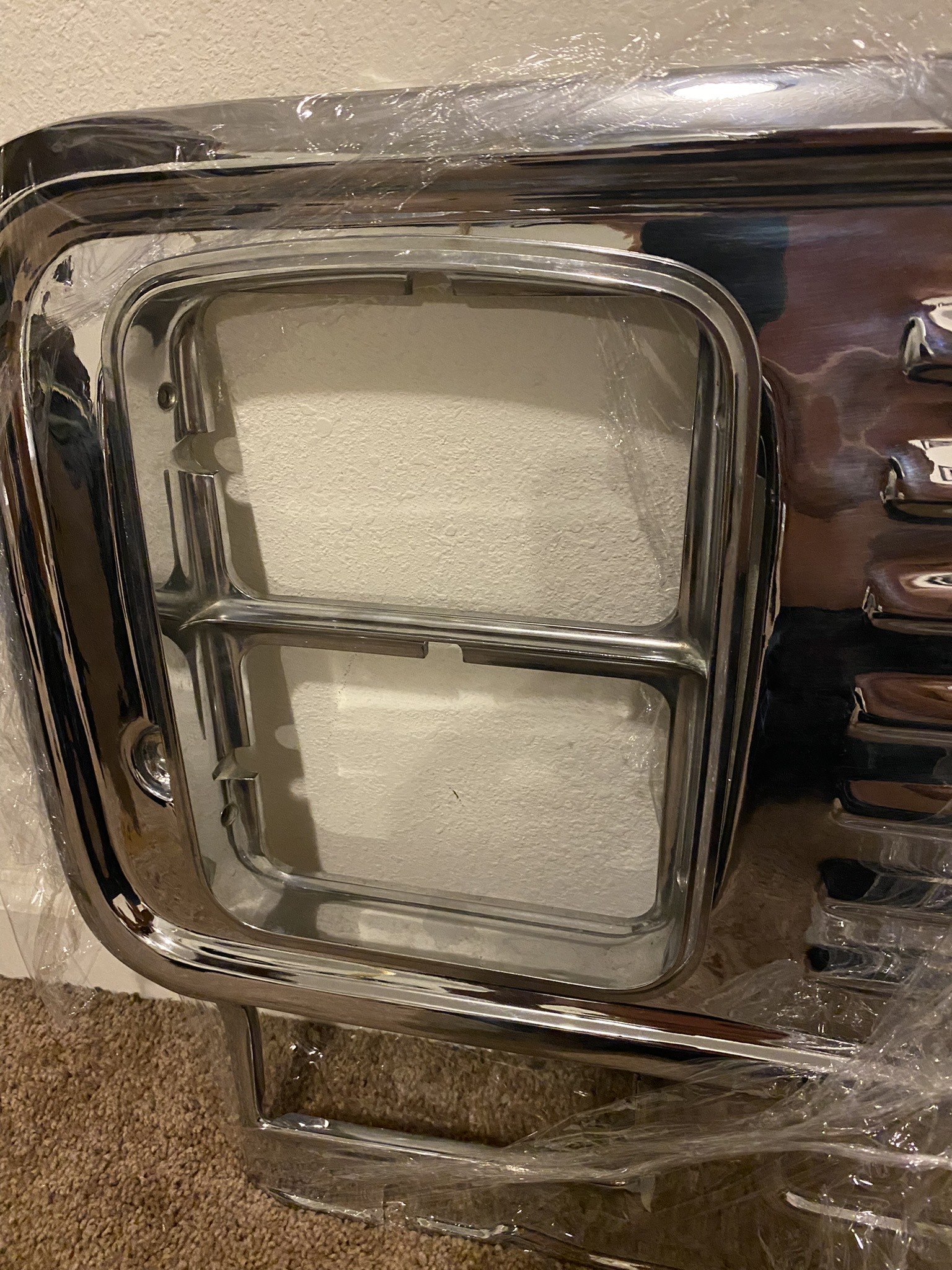
With the new SURF75 upgrade, Art’s 1991 van has 1975-77 taillights and polished bezels in place of the stock “elephant feet” versions. The 1971-77 bumper and grill have been customized to accommodate dual quad headlights with 1977 Monte Carlo bezels. The side marker lights are 1971-81 Pontiac Trans Am models.

Those Tran Am markers were one of the secrets that top customizers would keep to themselves, especially back in the 70’s.
“The 1971 -81 Trans Am markers could be retrofitted to the 3rd generation G series vans,” Art said. “On a G10 van the marker hole was cut to accept the marker assembly inside the fender, while the bezel was installed outside, recessing the outside trim into the marker pocket. I didn’t like the inset as I was trying to keep a factory look.
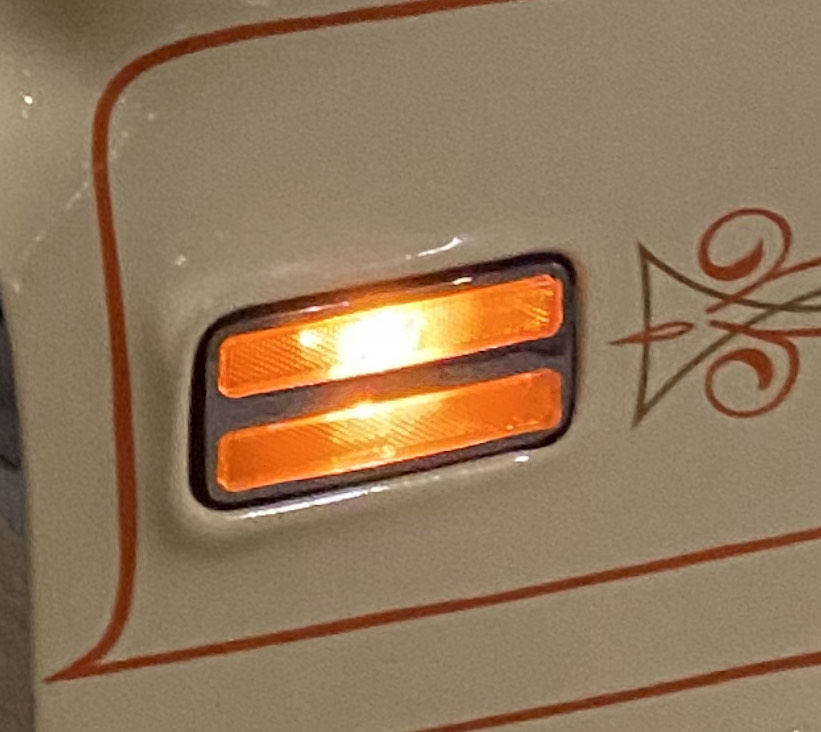

“To achieve that look, I separated the lens from its backing so I could mount the marker on the outside with a GM gasket. Unfortunately these 40 year old markers were never intended to be separated. But with model glue release – and after destroying numerous vintage assemblies – I was able remove the lens from the backing to complete a set.”
The G10 was originally a window van, which went against one of Art’s core beliefs. One of the first things he did was locate solid side doors to eliminate the side windows. Art also still has the windows in the back doors. “It is a surf van,” he said. “and it makes a big difference when you vent those back windows.”
The paint on the Chevy has been quite an adventure.
Back in 2020, with the help of Art’s friend Ronnie Griego, dents got fixed and the body prepped and it was off to the paint booth to be painted. Or not.
“We rented a paint booth,” Art said. “But our session got canceled. We had no choice. We took it in the backyard and painted it under one of those Harbor Freight tents.”
The first paint job was with the original factory color. After spraying it on, Art said, “it looked like a pink salmony color. It was unacceptable. So now I had $500 of this pink salmon paint and I went to Stevenson Paint and Supply in Carson and I let him do his magic.”


Stevenson changed pink salmon into a beautiful desert beige color.
The paint updates for SURF75 edition of the van include metal flake on the roof and new pinstriping. Both of those changes had their own adventures as well.
The roof sparkles were done by Art’s buddy Saul (@323saul on Instagram).
“We rented a paint booth to do the metal flake on the roof,” Art said. “The roof was so big we had to spray it five times. The owner of the booths didn’t know who was clogging up his filters with metal flake every week. We would paint it and leave and he would come back with his filter clogged. He kicked us out.”


To give some perspective, Art and Saul put over a pound of metal flake on top of that roof. Usually a quarter pound of metal flake will cover a whole car.
And then the pinstriping turned out to be two adventures.
Art hired one painter and gave him complete freedom to do whatever he wanted. It didn’t turn out like Art wanted.
“It wasn’t what I had in mind,” Art said, ‘but I graciously paid him and went home and immediately buffed everything off.”
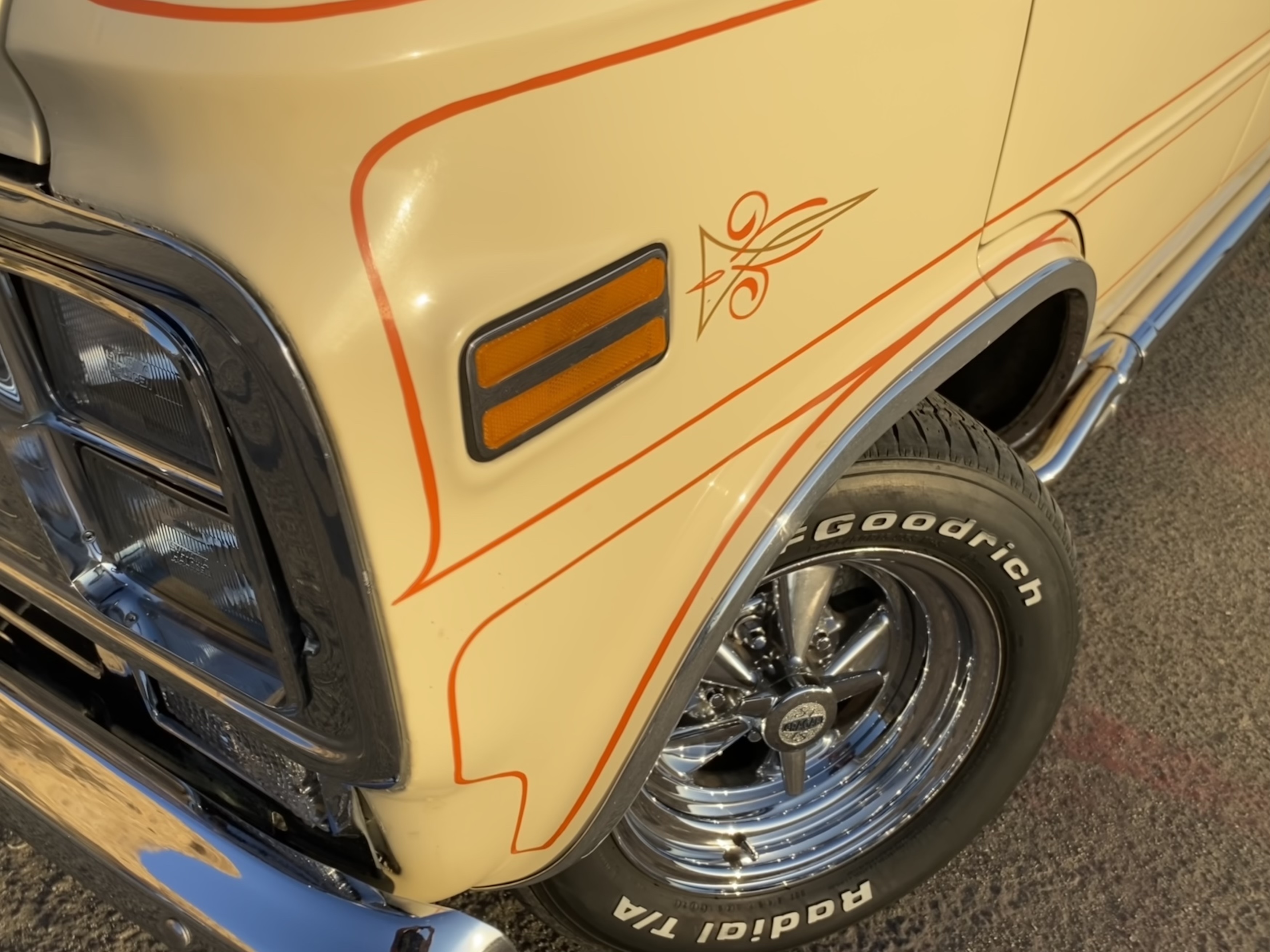
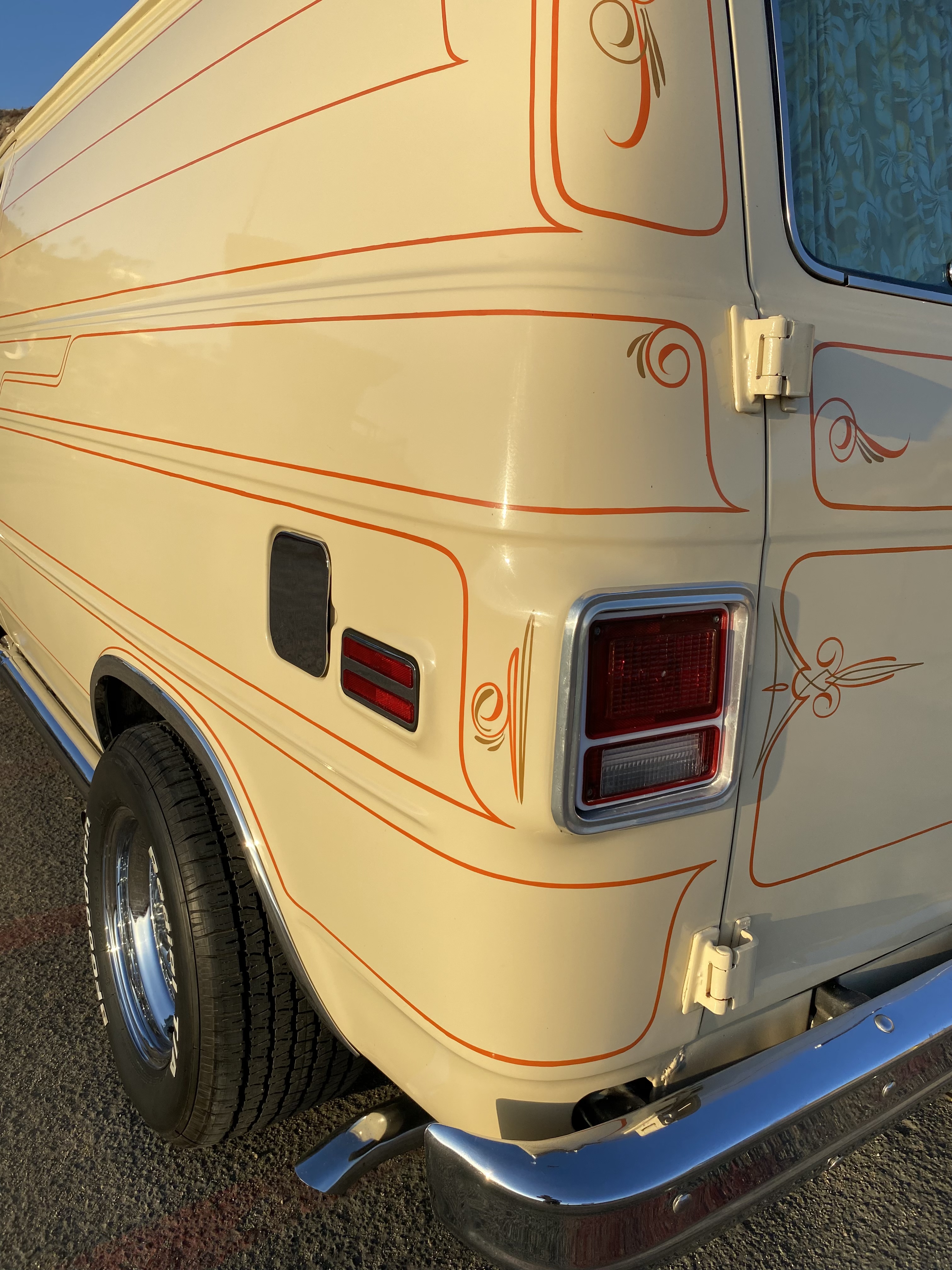
Art removed everything from that initial pinstripe job except for some small gold stripes as shown in the pictures. His good friend Alex of Malex Pinstripe in Lomita re-did the rest of the pinstriping, artfully incorporating the gold stripes that Art left from the original work.
But let’s face it. A 1970s style van is defined by its interior, and the cockpit is very important to Art. It’s where he really wants to create the Cadillac vibe.
Art has reupholstered the front captain’s chairs in black (of course they swivel) that came out of that $200 parts van and dyed the removable rear seat – which can fold down into a bed – to match. Art has even installed a small kitchen.
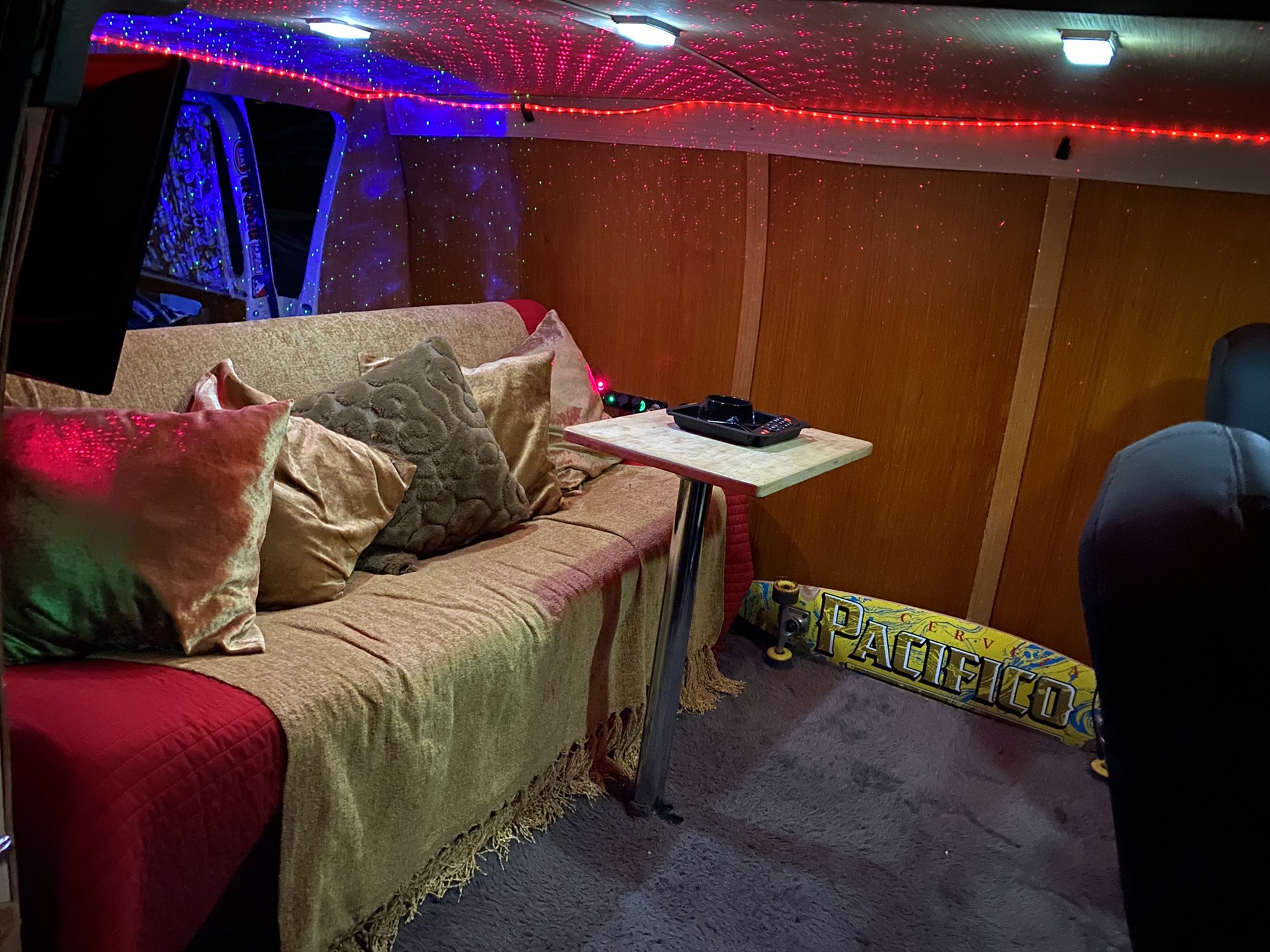
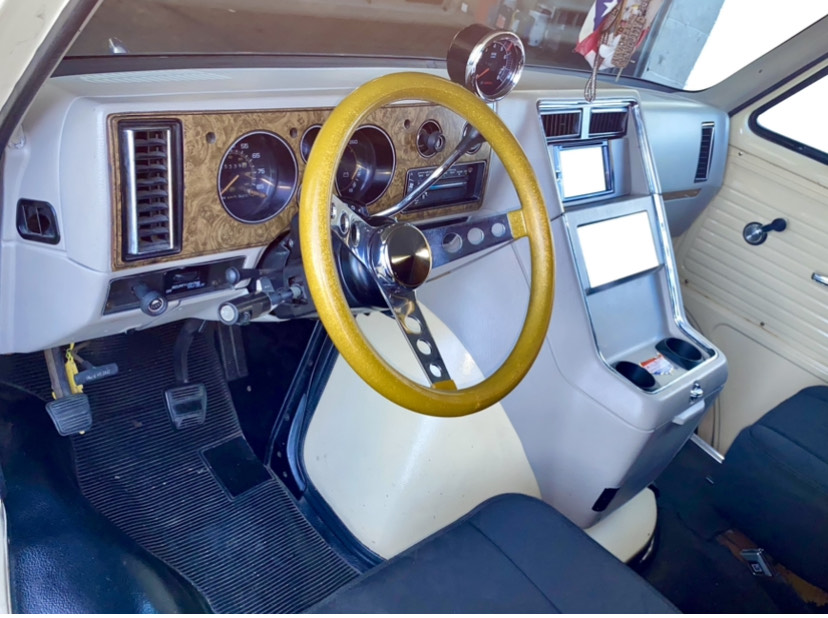
Art went to the junkyards to find as many interior parts as he could from Chevy’s Beauville line of passenger vans, which were very nicely finished inside, as compared to the bare bones cargo vans. He just recently purchased a complete Beauville carpet kit and is finishing up that installation.
The dashboard came out of a 1995 G10. In his efforts to make his backdating even more authentic, Art used a 1970s-style light switch, and added a cigarette lighter and wood grain instrument panel to the dash.
The dashboard and the Beauville trim were painted with SEM vinyl dies, also custom mixed by Stevenson to create “greige – not grey, not beige”, as Art described it.


And are you ready for this? Art’s dad, Art Sr., made and installed the G10’s curtains. Very cool.
There’s another custom van in Torrance called Money Green, built by John Poeske (@53kustoms on Instagram). In addition to being inspired by how Money Green was built, Art got direct help from John when he dropped off the inside panels of his van for Art to use as templates for his G10. Art used those templates to make real wood paneling.
Two other inspirations for Art’s interior are the luxury ocean liner the Queen Mary, with its art deco and mahogany veneer, and the older Chris-Craft wooden boats. That’s why Art has stained all those wood panels with “good old fashioned shellack.”
The wood panels may be old fashioned, but the electronics around them are not.
The van has a back up camera and navigation system, an AM FM Bluetooth stereo, and a 24″ flat panel TV connected to a Pioneer in-dash DVD player.
Art can also stream Netflix or HBO to the TV from his phone. He tested the video system by watching Led Zeppelin’s ‘The Song Remains the Same’ on YouTube while going down the freeway.
SURF75 also features low voltage marine electronics, USB ports, power ports with a voltage meter, and LED and laser projection lights. And of course, Art has a Midland portable CB radio.
Although it’s not his daily driver anymore, Art still drives the van frequently and it now has over 269,000 miles on it. He took it to the 50th Van Nationals in Colorado earlier this year.


SURF75 isn’t Art’s only restoration project. He has also restored a 1968 El Camino (which has been claimed by his 13 year old daughter Allison) and he restores classic Schwinn bicycles. He’s rebuilt over 40 of the classic bikes.
The desire to not leave well enough alone comes from Art, but he was quick to express his appreciation for the help he’s gotten from others.
That starts with Art’s parents, who have had an enormously positive impact on him.
“I could have never achieved any of my progress without the help of my father Art Sr.,” he told me. “He is my hero. My mom was my best friend. They always bragged to all their senior friends about the cool hot rods their kiddo builds.”
Art was also quick to point out how much help he’s gotten from the hot rod community. The Southern California vanners have helped immensely: Money Green, Long White Socks, Disco Van, and No Tell Motel among others.
Ronnie Griego of Griego Body and Paint in Torrance has always been there to help with paint and body work. And Curt Schaurker, a friend of Art’s for over 40 years, who Art described as his “motor guy and inspiration.”
Art wanted to be sure to mention others who have helped with SURF75. “I couldn’t have accomplished the build without these good friends,” he said.
They include Ben at Scion Automotive in Torrance; Malex Pinstripe in Lomita; Saul Glitter for his help with the roof and paint; Ron Cambra at Cambra Speed Shop in Orange for his great work on the front grill; and Jerry of JW Enterprises in Lake Elsinore (home of the World Famous “Glory Grills”) who was responsible for the headlight buckets and bezels
Even vanning history has inspired Art’s G10. He’d like to find anyone who knows about the Primo Van Club or the California’s Finest club. If you do, please contact Art. He remembers those clubs and would like to honor the influence they had on him.
Taking a van that seemed destined for the junkyard and turning it into a classic 70’s style cruiser is what hot rodding is all about. Continuing to improve on the work that’s already been completed is hot rodding at its finest.
“They’re never finished,” Art said. “They’re never done. They just keep getting better and better.”
Photos courtesy of Art Soto
Click here to see more photos of Art’s G10

 Garage Hot Rods
Stunning van wowowow
I just love this story, there is something magical about a car that was saved from the crusher, it seems the car will be forever grateful and it will perform flawlessly for years and years only to show this gratitude.
On top of that I love vans, and this one is just perfect.